
Think about the last marketing email you received.
Did you open it immediately?
Now think about the last WhatsApp message you received.
Chances are, you checked it within minutes.
That’s exactly why WhatsApp has become one of the most powerful sales channels for D2C brands. With high open rates, instant communication, and personalized customer interactions, WhatsApp is helping brands move beyond traditional marketing channels and build stronger customer relationships.
Today, customers expect quick responses, personalized recommendations, and seamless shopping experiences. WhatsApp enables brands to deliver all three while creating a direct line of communication with their audience.
As a result, WhatsApp Marketing for D2C Brands has become one of the fastest-growing channels for customer engagement and retention.
So, How D2C Brands Can Use WhatsApp to Increase Sales is no longer just a marketing question-it’s a business growth opportunity.
Let’s explore.
Why How D2C Brands Can Use WhatsApp to Increase Sales Is Becoming a Key Growth Strategy?
Most D2C brands invest heavily in ads to acquire customers. However, many struggle with retention and repeat purchases.
WhatsApp helps bridge that gap by creating a more personal and interactive shopping experience.
Some key benefits include:
- Faster customer communication
- Higher engagement rates
- Improved customer support
- Better cart recovery
- Increased repeat purchases
- Personalized shopping experiences
Unlike emails that often go unread, WhatsApp messages feel more direct and conversational, making customers more likely to engage.
Understanding How D2C Brands Can Use WhatsApp to Increase Sales starts with identifying the moments where customers are most likely to interact with your brand. From product discovery to post-purchase engagement, WhatsApp can influence buying decisions throughout the customer journey.
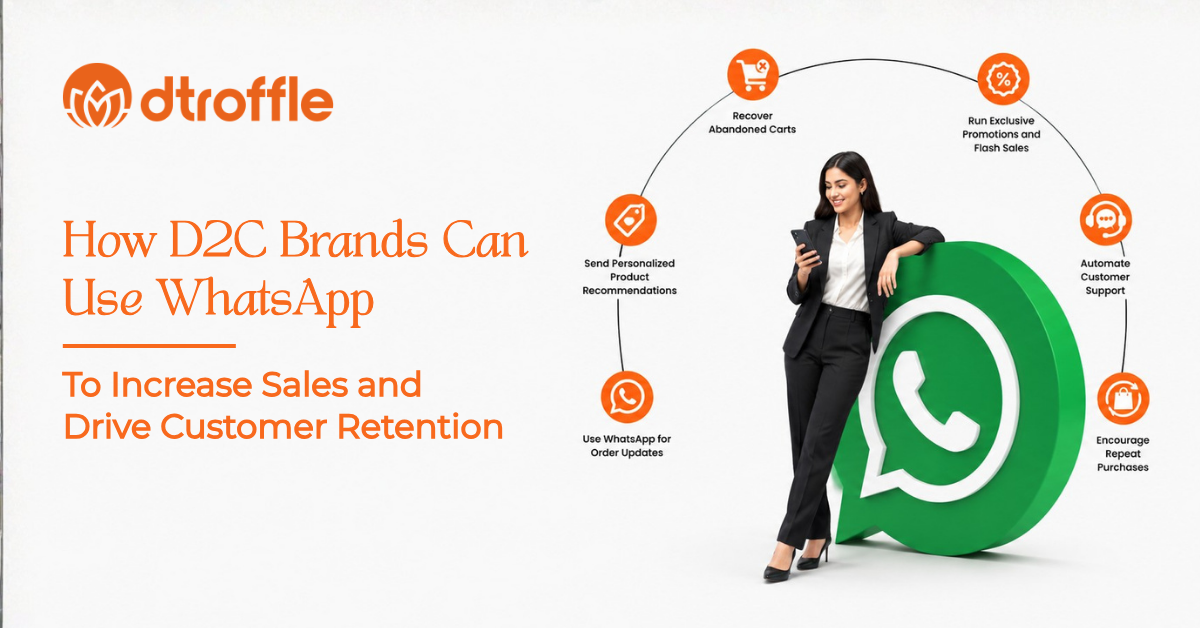
1. Recover Abandoned Carts
Cart abandonment is one of the biggest challenges for ecommerce brands.
Many customers add products to their cart but leave before completing the purchase. A simple WhatsApp reminder can encourage them to return and complete the transaction.
For example, instead of sending a generic email, brands can send a personalized WhatsApp message with the abandoned product details and a direct checkout link.
This small step can significantly improve conversion rates and recover lost revenue.
2. Send Personalized Product Recommendations
Customers are more likely to purchase when recommendations feel relevant.
Using customer browsing history and purchase behavior, brands can send personalized product suggestions directly through WhatsApp.
For example:
- Recommended products based on previous purchases
- New arrivals in a customer’s favorite category
- Complementary products related to past orders
Personalized recommendations create a more engaging shopping experience and increase the chances of repeat purchases.
This is one of the biggest advantages of WhatsApp Commerce, where brands can guide customers from product discovery to purchase within a familiar messaging environment.
3. Use WhatsApp for Order Updates
One of the most common reasons customers contact support is to ask about their orders.
Instead of making customers search for tracking information, brands can proactively send:
- Order confirmations
- Shipping updates
- Delivery notifications
- Return and refund updates
This improves customer satisfaction while reducing support queries.
A growing number of brands now rely on WhatsApp Business for Ecommerce to automate these updates and improve customer experience at scale.
4. Run Exclusive Promotions and Flash Sales
Customers appreciate feeling like they’re part of an exclusive community.
WhatsApp can be used to share:
- Early access to product launches
- Limited-time discounts
- Flash sale alerts
- VIP customer offers
Since WhatsApp messages are typically opened quickly, brands can create urgency and drive immediate action.
The key is to avoid excessive promotional messaging and focus on providing value.
5. Automate Customer Support
As a D2C brand grows, managing customer queries manually becomes difficult.
WhatsApp automation can help answer common questions related to:
- Order tracking
- Product availability
- Shipping policies
- Returns and exchanges
Automated responses provide customers with quick answers while allowing support teams to focus on more complex issues.
This improves efficiency without compromising customer experience.
6. Encourage Repeat Purchases
Acquiring a customer is expensive. Retaining them is often far more profitable.
WhatsApp can play a major role in customer retention through:
- Reorder reminders
- Product replenishment alerts
- Loyalty program updates
- Personalized offers
These messages keep customers engaged and encourage them to return to your store.
For brands selling consumable products such as skincare, supplements, or food items, replenishment reminders can be especially effective.
These campaigns play a crucial role in Customer Retention for D2C Brands by encouraging repeat purchases and long-term customer engagement.
Common Mistakes D2C Brands Should Avoid
While WhatsApp is a powerful channel, using it incorrectly can hurt customer relationships.
Avoid these mistakes:
- Sending too many promotional messages
- Messaging customers without consent
- Using generic, non-personalized communication
- Ignoring customer replies
- Focusing only on sales and not value
Successful WhatsApp marketing is about building conversations, not just broadcasting promotions.
How to Build an Effective WhatsApp Sales Strategy?
To maximize results, D2C brands should focus on the customer journey.
A simple WhatsApp Sales Strategy could include:
- Welcome new subscribers.
- Send abandoned cart reminders.
- Share personalized product recommendations.
- Provide order and delivery updates.
- Offer loyalty rewards and exclusive promotions.
- Re-engage inactive customers.
When combined, these touchpoints create a seamless shopping experience that drives both sales and retention.
Turn Conversations into Conversions with Growth Lab by Dtroffle
WhatsApp works best when it’s integrated into a broader customer retention and marketing strategy. At Growth Lab by Dtroffle, we help D2C brands leverage WhatsApp marketing alongside email automation, CRM, performance marketing, and customer journey optimization. From abandoned cart recovery and personalized campaigns to automated customer support and retention workflows, we create end-to-end solutions that drive higher sales, stronger customer relationships, and sustainable business growth.
FAQs: Use of WhatsApp to Increase D2C Brand Sales
Q 1. How can D2C brands use WhatsApp to increase sales?
Ans: Brands can use WhatsApp for abandoned cart recovery, personalized recommendations, order updates, customer support, loyalty campaigns, and customer re-engagement. These strategies help improve conversions and drive repeat purchases.
Q 2. Is WhatsApp marketing effective for D2C brands?
Ans: Yes. WhatsApp Marketing for D2C Brands enables direct communication with customers, resulting in higher engagement and better conversion opportunities compared to many traditional marketing channels.
Q 3. Can small D2C brands use WhatsApp marketing?
Ans: Absolutely. WhatsApp is an affordable and scalable marketing channel that can benefit both emerging and established D2C brands.
Q 4. What type of messages should brands send on WhatsApp?
Ans: Brands can send order updates, cart reminders, product recommendations, loyalty rewards, customer support responses, and exclusive promotional offers while ensuring messages remain relevant and valuable.
Final Thoughts: How D2C Brands Can Use WhatsApp to Increase Sales?
Understanding How D2C Brands Can Use WhatsApp to Increase Sales is no longer optional for brands looking to compete in today’s ecommerce landscape.
From recovering abandoned carts and sending personalized product recommendations to improving customer support and driving repeat purchases, WhatsApp offers multiple opportunities to engage customers throughout their buying journey.
Whether your goal is increasing conversions, improving customer experience, or strengthening Customer Retention for D2C Brands, WhatsApp can become a powerful growth channel when used strategically.
Brands that invest in a well-planned WhatsApp strategy today will be better positioned to build stronger customer relationships and drive sustainable growth in the future.