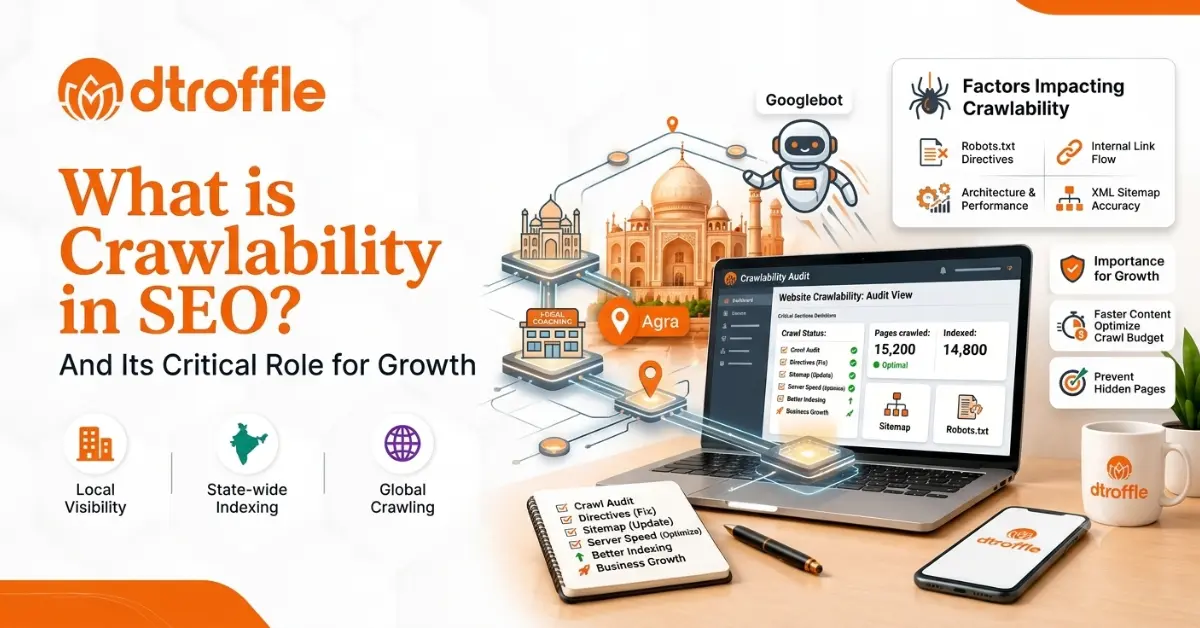

Before a search engine can rank your website, feature your content in answer boxes, or cite your brand in generative AI answers, it must first be able to access your pages. This foundational technical process begins with crawlability. In modern search optimization, crawlability is the gateway to visibility. If search engine bots cannot smoothly navigate and read your site’s structure, even the highest-quality content will remain hidden from potential customers.
What is Crawlability in SEO?
Crawlability refers to a search engine’s ability to access, scan, and discover content on a website’s web pages. Search engines like Google use automated software programs – commonly known as web crawlers, spiders, or bots (such as Googlebot) – to navigate the web by following links from one page to another.
When a crawler visits your site, it attempts to download page resources, follow internal links, and understand the overall site structure. If your site has no technical barriers blocking these bots, it is considered highly crawlable.
It is vital to distinguish crawlability from indexability:
- Crawlability is about whether search engine bots can reach and read a page.
- Indexability is about whether search engine bots are allowed to analyze and store that page in their search index.
A page must be crawlable before it can ever become indexable.
Why Crawlability Matters for SEO?
Crawlability is the bedrock of technical SEO. Without solid crawlability, every other optimization effort – from keyword research and on-page content to backlink building – becomes ineffective. Here is why it is essential:
- Faster Discovery of New Content: When you publish new landing pages, product updates, or answer-led blog posts, high crawlability ensures search bots discover them quickly, allowing your site to capitalize on search demand.
- Optimization of Crawl Budget: Search engines assign a crawl budget to every website – the number of pages a crawler will review during a visit. If crawlers get stuck on broken links or slow server responses, they waste crawl budget on low-value pages, leaving your key service pages unvisited.
- Prevention of Hidden Pages: If poor site navigation or incorrect technical directives block spiders from crawling core service pages, those pages will never appear in search engine results, resulting in lost traffic and revenue.
- Foundation for AEO and GEO: Modern answer engines and generative AI tools rely on fresh, structured content extraction. If crawlers cannot efficiently parse your site, AI systems cannot feature your brand in direct answers.
Key Factors That Impact Site Crawlability
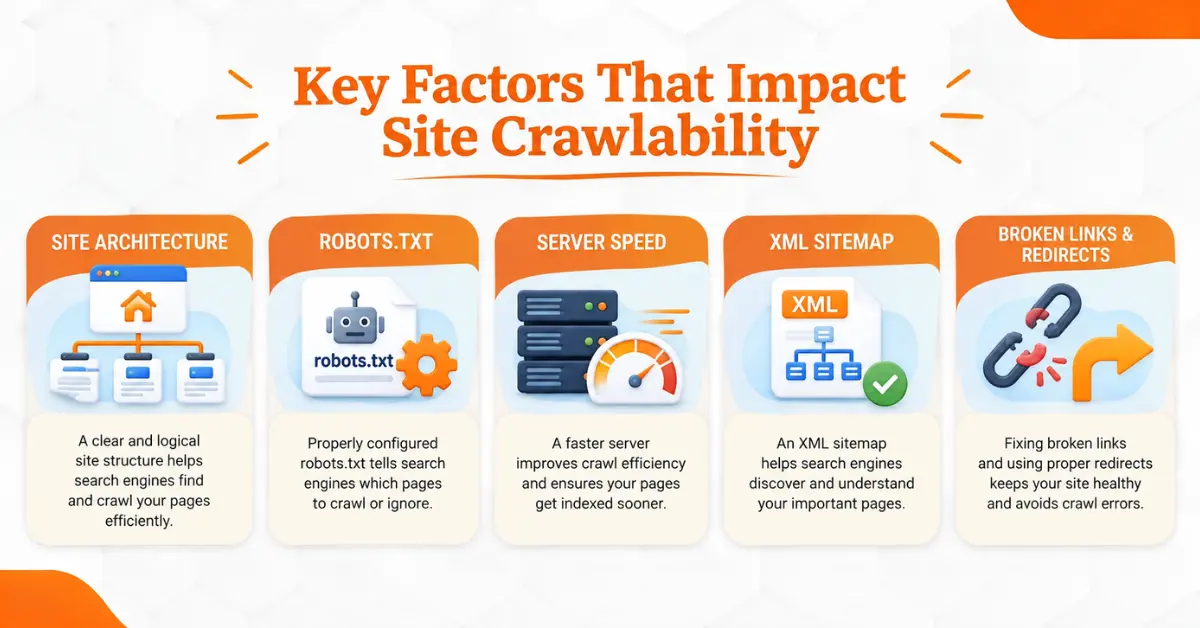
Maintaining a crawlable website requires regular technical monitoring. Key factors include:
- Site Architecture and Internal Linking: A logical visual hierarchy with clear internal links allows crawlers to move effortlessly from your homepage to deep service pages.
- Robots.txt Directives: Misconfigured block rules in your robots.txt file can accidentally prevent search bots from accessing high-priority sections.
- Server Performance and Uptime: Frequent server errors or slow response times cause crawlers to halt their session early to avoid overloading your site.
- XML Sitemaps: A clean XML sitemap provides crawlers with a clear map of your canonical URLs, simplifying content discovery.
- Broken Links and Redirect Loops: 404 errors and repeated redirects waste crawling efficiency and interrupt spider navigation.
Resolve Crawlability & Indexing Issues with Dtroffle
If your web pages take weeks to index or search crawlers struggle to navigate your site, Dtroffle – a leading SEO agency in Agra – is here to help. We perform comprehensive technical audits to identify crawl bottlenecks, misconfigured directives, server errors, and broken link loops that prevent Googlebot from accessing your content. Our team optimizes your site architecture, XML sitemaps, and internal link flow so search engines can discover, parse, and index your pages rapidly.
Partner with Dtroffle to resolve your technical roadblocks and ensure your website remains fully crawlable, indexable, and positioned for growth.

Would you like us to run a preliminary audit on your current XML sitemap and robots.txt file to identify any active crawl issues? Talk to Our Expert Now!
For more detailed information, you can read Google’s official guide on Crawling & Indexing.