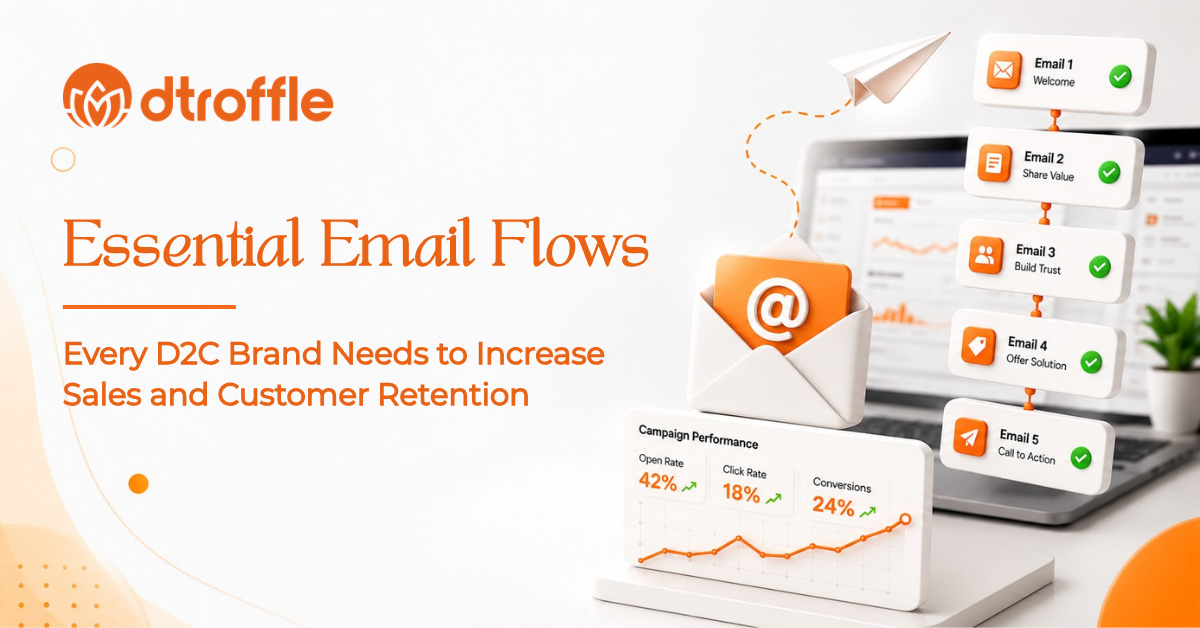

Essential Email Flows Every D2C Brand Needs: Imagine spending thousands of rupees on Meta Ads, Google Ads, and influencer marketing to acquire customers-only to lose them after their first purchase.
Unfortunately, this is a common challenge for many D2C brands.
While customer acquisition often gets the spotlight, customer retention is what drives sustainable growth. That’s where email marketing becomes a game-changer.
The most successful D2C brands don’t send random promotional emails whenever they have a sale. Instead, they build automated email flows that guide customers through every stage of their journey-from discovery to purchase and beyond.
These automated email sequences work 24/7, helping brands recover abandoned carts, increase repeat purchases, build trust, and strengthen customer relationships.
Let’s explore the essential email flows every D2C brand should implement.
Why Email Flows Matter for D2C Brands?
Email marketing remains one of the highest ROI channels in ecommerce.
Unlike social media platforms where algorithms control visibility, email gives brands direct access to their audience.
Effective email flows can help:
- Recover lost sales
- Improve customer retention
- Increase customer lifetime value
- Strengthen brand loyalty
- Drive repeat purchases
- Automate customer communication
- The key is sending the right message at the right time.
1. Welcome Email Flow
The welcome email is often a customer’s first direct interaction with your brand.
When someone subscribes to your newsletter or creates an account, they’re already interested in your products. This is the perfect opportunity to make a strong first impression.
A welcome flow typically includes:
- Brand introduction
- Your story and mission
- Best-selling products
- First-purchase discount
- Social proof and reviews
The goal is to build trust and encourage a first purchase.
Why Welcome Email Flow Matters?
Customers are most engaged immediately after signing up. A well-crafted welcome sequence can significantly improve conversion rates.
2. Abandoned Cart Email Flow
Cart abandonment is one of the biggest revenue leaks for D2C brands.
Customers often add products to their cart but leave before completing the purchase due to distractions, price concerns, or hesitation.
An abandoned cart flow reminds customers about the products they left behind and encourages them to return.
A typical sequence includes:
- Friendly reminder email
- Product benefits and reviews
- Urgency-based follow-up
- Limited-time incentive if necessary
Why Abandoned Cart Email Flow Matters:
Recovering even a small percentage of abandoned carts can have a major impact on revenue.
3. Browse Abandonment Flow
Not every potential customer adds products to their cart.
Many visitors browse products, show interest, and leave without taking action.
Browse abandonment emails target these users by reminding them about the products they viewed and showcasing related recommendations.
Why Browse Abandonment Flow Matters?:
These emails help bring back high-intent visitors who may simply need an extra push before purchasing.
4. Post-Purchase Email Flow
The customer journey doesn’t end after a sale.
In fact, what happens after the purchase often determines whether a customer buys again.
A post-purchase flow can include:
- Order confirmation
- Shipping updates
- Product usage tips
- Customer support information
- Product review requests
This flow helps improve customer satisfaction while strengthening trust in your brand.
Why Post-Purchase Email Flow Matters?:
A positive post-purchase experience increases the likelihood of repeat purchases.
5. Review Request Email Flow
Customer reviews are one of the most powerful forms of social proof.
After customers receive and use a product, brands should encourage them to leave feedback.
Review request emails can ask customers to:
- Rate their experience
- Share product reviews
- Upload customer photos
- Provide testimonials
Why Review Request Email Flow Matters?:
Reviews build credibility and help future customers make purchasing decisions.
6. Win-Back Email Flow
Not every customer will return on their own.
A win-back flow targets customers who haven’t engaged or purchased in a specific period of time.
These emails often include:
- Personalized product recommendations
- New arrivals
- Exclusive offers
- Loyalty rewards
Why Win-Back Email Flow Matters?
Winning back an existing customer is often cheaper than acquiring a new one.
7. Loyalty and VIP Email Flow
Your most loyal customers deserve special attention.
A VIP email flow rewards repeat buyers and helps strengthen long-term relationships.
Examples include:
Early access to launches
Exclusive discounts
Loyalty program updates
Birthday rewards
Why Loyalty and VIP Email Flow Matters?
Loyal customers often generate a significant portion of a brand’s revenue.
Common Email Marketing Mistakes D2C Brands Make
Even with automation, poor execution can limit results.
Some common mistakes include:
- Sending too many promotional emails
- Ignoring customer segmentation
- Using generic messaging
- Not optimizing for mobile devices
- Failing to test subject lines
The best email marketing strategies focus on relevance rather than volume.
FAQs: Essential Email Flows Every D2C Brand Needs
Q 1. What is the most important email flow for D2C brands?
Ans: The welcome email flow and abandoned cart flow are often considered the most important because they directly impact conversions and revenue.
Q 2. How many email flows should a D2C brand have?
Ans: Most D2C brands should start with five to seven core email flows, including welcome, abandoned cart, post-purchase, review request, and win-back sequences.
Q 3. Can email flows increase customer retention?
Ans: Yes. Automated email flows help brands stay connected with customers, encourage repeat purchases, and improve customer lifetime value.
Q 4. How often should D2C brands send marketing emails?
Ans: The ideal frequency depends on your audience and industry, but brands should focus on delivering relevant and valuable content rather than sending emails too frequently.
Final Thoughts: Essential Email Flows Every D2C Brand Needs
Email marketing is much more than promotional campaigns. For D2C brands, automated email flows play a crucial role in customer acquisition, retention, and long-term growth.
From welcoming new subscribers and recovering abandoned carts to nurturing loyal customers and re-engaging inactive buyers, these email flows help create meaningful customer experiences while driving revenue.
If your brand isn’t using these essential email flows yet, now is the time to start. The right automation strategy can turn one-time shoppers into loyal customers and help build a more sustainable ecommerce business.