

Digital Marketing Content Optimization Guide: How to Maximize Results in 2026?
In 2026, content is no longer just a vehicle for keywords, it’s the foundation of digital marketing success. Whether you’re writing blog posts, designing landing pages, or creating product descriptions, your content must be intentional, valuable, and optimized for both search engines and users.This digital marketing content optimization guide will walk you through what content optimization really means today, why it’s crucial, and how you can improve every piece of content you publish for maximum visibility and conversion. What Is Content Optimization in Digital Marketing? Content optimization is the process of improving content performance by ensuring it reaches the right audience, ranks well in search engines, and achieves your business goals. This includes enhancing: Relevance (for search intent)Structure (for readability and SEO)Visual elements (for engagement)Internal linking (for authority flow)Performance (for conversions and ROI) In other words, optimization isn’t just technical, it’s strategic. As explained in our pillar guide on digital marketing strategy, a strong strategy needs content that aligns with business objectives. Why Content Optimization Matters in 2026 Search engines like Google continue to prioritize content that’s helpful, well-structured, and user-focused. Meanwhile, users are increasingly overwhelmed by low-value content.Optimized content: Ranks higher in search resultsIncreases time on pageImproves lead quality and conversionsBoosts brand trust and credibility Optimization is also crucial to stay competitive in a digital-first world where attention is the currency and great content is how you earn it. Core Pillars of Content Optimization Let’s break down the key areas every digital marketer should focus on: 1. Understand and Match Search Intent Before optimizing any page, ask: What is the user looking for?Understanding what marketing truly means in today’s context helps define this. There are generally four types of search intent: Informational (e.g., “how does content marketing work?”)Navigational (e.g., “dtroffle blog”)Transactional (e.g., “buy SEO services”)Commercial Investigation (e.g., “best digital marketing agency in Jaipur”) Your content should match the intent with the right format guide, listicle, comparison, video, or FAQ. 2. Optimize On-Page SEO Elements Every content piece should be fine-tuned for discoverability. That means: Keyword placement in titles, meta descriptions, headers, and image alt textReadable formatting (use bullet points, short paragraphs, subheadings)Schema markup for rich results (learn about structured data here) 3. Strengthen Internal Linking Internal links signal relevance and help spread authority across your website. For example: Link to your Digital Marketing Services page from relevant blog contentLink to your own insights on ethical marketing practices or digital PR where relevant This improves crawlability, reduces bounce rates, and keeps users engaged longer. 4. Use Engaging Media and UX Enhancements Content isn’t just words anymore. High-performing pages include: Relevant images and infographicsVideosInteractive elements like calculators or quizzesStrong CTAs that drive action When discussing ads, for example, pair insights with visuals or comparisons like this one between Google Ads and Meta Ads. 5. Regularly Update and Prune Old Content Old content can drag down your site’s overall SEO health. Use a content audit process to: Identify outdated pagesRefresh stats and trendsRemove low-value posts or consolidate related topics This strategy, often referred to as content pruning, is a critical maintenance tactic for keeping your digital footprint lean and effective. Advanced Content Optimization Trends in 2026 To truly stay ahead in the digital landscape, your content optimization strategy must adapt to how search and discovery are evolving. Here are three cutting-edge areas you cannot afford to overlook: 1. Optimize for Google’s SGE (Search Generative Experience) Google’s Search Generative Experience (SGE) introduces AI-generated summaries directly into the search results, changing how users interact with SERPs.To get featured in SGE: Use clear, factual, well-structured answers in your contentOptimize FAQ sections and highlight stat-based insightsInclude authoritativeness signals (internal linking, expert tone, and clarity) Being featured in SGE doesn’t just bring visibility, it positions your brand as the go-to answer source. Learn how a strong digital marketing strategy underpins this kind of high-impact visibility. 2. AIO: AI-Generated Content Optimization AI tools like ChatGPT, Jasper, and Gemini are widely used to generate blog drafts and outlines. But AI-written content must be optimized for originality, depth, and human experience.To optimize AI-generated content (AIO): Add original insights, case studies, or examples from your workEdit for tone, flow, and brand voiceCheck for topical completeness and semantic richness Your goal is to enhance what AI starts, not publish it raw. Pair AI speed with human strategy for content that ranks and resonates. 3. Voice Search Optimization With the rise of smart speakers and mobile voice assistants, optimizing for voice search is more important than ever.To optimize for voice: Use conversational language and question-based headersFocus on featured snippets and long-tail queriesInclude location-based terms for local SEO impact For example, a voice query like “Which is the best digital marketing agency in Jaipur?” could lead users to this blog on top agencies in Jaipur, provided it’s optimized accordingly. Pro Tips for Content Optimization Use heatmaps and analytics to identify content drop-off pointsCreate pillar-cluster structures to support authority (just like this article supports our main digital marketing strategy pillar)Repurpose content into multiple formats for better ROIMonitor performance KPIs: bounce rate, conversion rate, CTR, scroll depth Conclusion In 2026, content optimization is more comprehensive and AI-influenced than ever before. From classic on-page SEO to emerging formats like SGE and voice search, staying current is non-negotiable.Build smarter content, structure it for humans and search engines, and adapt it for the platforms people are actually using. To make this all work under one roof, consider leveraging professional digital marketing services that stay ahead of the curve, so your brand does too. Frequently Asked Questions:Q. What is digital content optimization? Answer:Digital content optimization is the process of improving content performance by aligning it with SEO best practices, user intent, and search engine algorithms. It involves refining content structure, keywords, readability, metadata, and media to enhance visibility and engagement. Q. What is AIO (AI-generated content optimization)? Answer:AIO stands for AI-generated content optimization. It refers to refining content created by AI tools to ensure it is accurate, contextually relevant, humanized, and SEO-friendly. This includes editing for tone, verifying facts,
Digital PR in 2026 | How It Can Help in Business Growth?
Digital PR Benefits Your Business in 2026: In today’s hyper-connected world, Digital PR has become more than just online press coverage. It’s a powerful branding, SEO, and trust-building strategy that helps your business stand out in a noisy market. In this blog, we’ll break down how Digital PR works, why it’s a must-have in your digital marketing strategy, and how to get started the right way. Want to boost your brand visibility beyond paid ads and social media? Explore our Digital Marketing Services What Is Digital PR? Digital PR (Public Relations) is the practice of using online platforms to build brand authority, increase visibility, earn backlinks, and drive organic traffic. It goes beyond traditional PR by integrating SEO, content marketing, influencer outreach, and media relations. Instead of relying solely on press releases, Digital PR taps into: Why Digital PR Matters in 2026? In 2026, Google’s algorithms value authority, expertise, and credibility more than ever. Digital PR fuels all three while also contributing to your: Still confused about digital marketing foundations? Read: What is Marketing and What is Its Benefit in 2026 5 Ways Digital PR Can Benefit Your Business 1. Earn High-Quality Backlinks (Boost SEO) Digital PR secures links from trustworthy sources like news sites, blogs, and online magazines. These backlinks improve your domain authority and organic search visibility. Example: Being mentioned on platforms like YourStory, Hindustan Times, or Entrepreneur.com can drive SEO results better than 50 low-quality backlinks. 2. Build Online Authority & Trust When customers see your brand featured on credible platforms, it instantly builds trust. You’re no longer just “another business”-you’re seen as a reliable industry voice. Related: Ethics in Digital Marketing – Why Transparency Wins 3. Attract Journalistic Opportunities Digital PR opens the door to media queries and reactive PR campaigns using platforms like HARO (Help a Reporter Out), Qwoted, and Twitter journalism. You become a go-to expert in your industry-and journalists come to you. 4. Support Your Content Marketing Strategy If you’re investing in blogs, videos, or infographics-Digital PR helps you amplify that content. You can pitch it to media outlets, influencers, or niche publications for added reach. Note: Pair this with strong content optimization practices for best results. 5. Enhance Brand Visibility and Traffic Well-placed mentions drive referral traffic, create buzz on social media, and increase branded search queries. In a competitive space like Jaipur, Delhi, or Mumbai—Digital PR can be the differentiator. How to Build a Winning Digital PR Strategy Step-by-step guide on how to use Digital PR to build brand authority, gain backlinks, and boost SEO. Step 1: Define Your Brand Story Understand what sets you apart. Craft a brand narrative that resonates emotionally and professionally. Step 2: Identify Your Target Publications List down top blogs, magazines, and platforms where your audience hangs out. Step 3: Create a PR-Worthy Asset This could be a new launch, survey data, infographic, expert article, or an exclusive insight piece. Step 4: Pitch It to the Right People Use personalized emails to reach editors, bloggers, and journalists. Be concise and compelling. Step 5: Monitor and Amplify Track coverage via Google Alerts or PR tools. Share your media wins on your own social platforms and email campaigns. Final Thoughts Digital PR isn’t just a nice-to-have-it’s a powerful growth engine. Whether you’re a startup or an established brand, it helps you get seen, get trusted, and get chosen. Ready to scale your PR outreach in 2026? 👉 Talk to Dtroffle – A Full-Service Digital Marketing Partner » Frequently Asked Questions Q1. Is Digital PR good for small businesses? Yes! In fact, it levels the playing field by helping smaller businesses earn credibility and traffic without huge budgets. Q2. How does Digital PR help SEO? It secures high-authority backlinks and brand mentions that improve your search engine ranking and online visibility. Q3. What’s the difference between traditional PR and digital PR? Traditional PR focuses on offline media (TV, newspapers), while digital PR uses online channels like blogs, news sites, social media, and influencer platforms. Q4. How soon can I expect results from Digital PR? Results vary, but most businesses see improved visibility and SEO traction within 3-6 months with consistent efforts. Q5. Can I do Digital PR without a PR agency? Yes, but it requires time, strategy, and consistent outreach. Agencies help scale and guide the process faster. Also Read:
Micro-Influencer Marketing | Why Small is the New Big in 2026 | Dtroffle

Micro-Influencer Marketing: In a world dominated by likes and follows, the biggest names aren’t always the most influential. Enter micro-influencers everyday content creators with 1,000 to 100,000 followers who are redefining what it means to connect with audiences online.Unlike traditional celebrity influencers, micro-influencers thrive in niche communities. They bring real engagement, authentic storytelling, and higher conversion potential making them a secret weapon for modern digital marketers. What Are Micro-Influencers? Micro-influencers are social media personalities who have built a loyal and engaged following within a specific niche, such as fitness, fashion, travel, or tech. Unlike celebrity influencers, they create content that resonates deeply with their audience, leading to higher trust and interaction rates.Why do they matter?Because trust drives conversions and people trust relatable voices more than polished celebrities. Final Thoughts About Micro-Influencer Marketing In 2025, small is mighty. Micro-influencers bring relatability, loyalty, and real conversations to your brand and that’s where marketing magic happens. Ready to amplify your marketing through strategic influencer collaborations? Explore our Influencer Marketing Services. Frequently Asked Questions Q. Are micro-influencers more effective than celebrity influencers? Yes, in most cases. They have more engaged audiences, lower costs, and higher ROI per campaign. Q. How much does it cost to work with a micro-influencer? It varies by niche and follower count, but it can range from ₹2,000 to ₹25,000 per post, depending on content format and platform. Q. Which platform is best for micro-influencer marketing? Instagram and YouTube are top performers, but don’t ignore emerging platforms like Threads and niche-specific blogs. Q. How can I find the right micro-influencers for my business? Use tools like Heepsy, Upfluence, or simply manual search on Instagram/LinkedIn. Look for niche fit, real engagement, and content relevance. Q. What industries benefit most from micro-influencers? Lifestyle, fitness, food, skincare, fashion, and SaaS brands see the most success, but any niche with a passionate audience can win. Also Read:
Top 5 Digital Marketing Strategies Every Growing Brand Should Use in 2026
Do you know that during a research there were around 500,000 identifiable brands worldwide across more than 2,000 product categories. But the major question here is whether your brand identifiable or not? To make your brand identifiable you need digital marketing strategies every growing brand should use in 2026. While most of the online marketing strategy is nothing but havoc and you don’t even know which one is best for your brand. But don’t you worry about these things we’re to answer each and every aspect of the branding that will help you to grow. Why it is Important to Have Digital Marketing Strategies More Than Ever in 2026? Digital marketing has always been important, but in 2026 it has become absolutely essential for any brand that wants to grow. Competition is at an all-time high, and customers now expect seamless, personalized experiences across every channel they use. They’re not just comparing you to your direct competitors, they’re comparing you to the best digital experiences they’ve ever had. That means your brand needs to show up in smarter, more meaningful ways. At the same time, the rise of AI, automation, and data-driven insights is transforming the way marketing works. Brands that use these tools can understand their audiences better, create tailored messaging at scale, and make faster, more informed decisions. Those that don’t adapt risk falling behind quickly. Another major shift is how people consume content. Customers move between platforms constantly: social media, search engines, email, video, websites and they expect brands to meet them wherever they are. If your digital presence isn’t consistent, relevant, and accessible, you’ll lose them long before they reach the point of purchase. All of this makes one thing clear: brands need a strong, intentional digital marketing strategy to compete in 2026. With the right plan, every effort becomes more effective and growth becomes much easier to achieve. Digital Marketing Strategies Every Growing Brand Should Use in 2026 Digital marketing evolves fast, and in 2026, brands can’t afford to rely on outdated tactics. To actually grow-without burning through your budget – you need strategies that match how people behave online today. Here are five of the most effective digital marketing strategies every growing brand should be using this year: 1. AI-Powered Personalization AI isn’t just a buzzword anymore it’s become one of the biggest drivers of brand growth. Personalization powered by AI allows you to deliver content, product recommendations, and experiences that feel tailored to each user. Instead of showing everyone the same message, AI tools learn what people actually respond to and adapt in real time. This makes your marketing more relevant, increases engagement, and boosts conversions. In 2026, customers expect personalization. If your brand doesn’t offer it, someone else will. 2. Short-Form Video That Captures Attention Quickly Short-form video continues to dominate platforms like TikTok, Instagram Reels, and YouTube Shorts. The reason is simple: people enjoy quick, entertaining, and visually engaging content. Your brand doesn’t need huge production budgets. Authentic, valuable videos often perform better than overly polished ones. Behind-the-scenes clips, quick tips, user stories, or product highlights can all work well. If you’re not creating short videos, you’re missing out on a massive traffic and conversion opportunity. 3. Content That Solves Real Problems High-quality content remains one of the most dependable digital marketing strategies, especially for long-term growth. But in 2026, selling isn’t enough. You need to solve problems. Whether it’s blog posts, guides, emails, or tutorials, your content should answer the questions customers are already asking. When your brand becomes genuinely helpful, people trust you more and naturally move closer to buying. This type of content also supports SEO, helping your brand rank for keywords that matter. 4. First-Party Data Collection and Smart Segmentation With privacy regulations tightening and third-party cookies becoming less reliable, first-party data is becoming a brand’s most valuable asset. This includes email subscribers, customer purchase history, website analytics, and survey responses. When you own your data, you’re not dependent on unreliable ad platforms to understand your audience. Pair that data with segmentation, and you can create highly targeted campaigns that feel personal rather than generic. This leads to better performance and lower marketing costs. 5. Building and Nurturing a Strong Online Community People want to connect with brands that feel human, relatable, and active. That’s why community-building is becoming a core digital marketing strategy. Engaging with your audience through comments, stories, DMs, or discussion groups builds trust and loyalty. A strong community not only boosts brand awareness but also turns customers into advocates who share your content, leave reviews, and recommend your products. It’s one of the most powerful long-term growth strategies especially for brands in competitive markets. These five strategies offer a balanced mix of visibility, engagement, personalization, and long-term growth. If you start implementing even two or three of them now, you’ll already be ahead of many brands still trying to catch up in 2026. How to Know Which Digital Marketing Strategy is Better for Your Brand in 2026? When you’re trying to decide which digital marketing strategies to focus on, start by really understanding your audience what they care about, where they spend their time, and how they make decisions. This is exactly what a trusted partner like Dtroffle helps businesses uncover through smart insights and practical guidance. From there, take a look at your goals, your budget, and the industry you’re in, because not every strategy fits every brand. Even the best Digital Marketing Agency will tell you that you shouldn’t try to implement everything at once. Instead, pick a few tactics that align with your business and test them gradually. Track what’s working, drop what isn’t, and keep refining your approach. Consistent improvement is where the real growth happens and pairing these efforts with the right Digital Marketing Services can help you scale even faster without feeling overwhelmed. Let’s Compile Things in Short At the end of the day, these digital marketing strategies matter because they help your brand stay relevant,
B2B Digital Marketing Strategy: 10 Approaches for Manufacturing Marketing
Manufacturing companies focus heavily on precision, whether it’s production, quality, or delivery. But when it comes to marketing, many still depend on trade shows, referrals, and cold calls. While these methods still work, today’s buyers research online long before they talk to a salesperson. That’s why you need a strong B2B digital marketing strategy. Manufacturers who use digital channels get better-quality leads, faster sales, and stronger brand trust. If you want to upgrade your manufacturing marketing, here are 10 simple approaches that genuinely work. 1. Build a Website That Educates and Converts Your website is more than a brochure, it’s your digital sales portal. It should clearly communicate what you offer and guide visitors toward taking action. Many brands struggle with this clarity, and that’s where Dtroffle can help refine your homepage and service pages so they speak to the right audience and convert better. Which Includes: A strong website is the foundation of all your digital marketing. 2. Use SEO to Reach Engineers and Buyers Most engineers, procurement teams, and OEMs start their search online. SEO helps your business appear when they look for solutions. Focus on: SEO takes time, but once your site ranks, it continuously brings qualified leads. 3. Use Content Marketing to Prove Your Expertise Manufacturing buyers want to work with experts they can trust. Content helps you show your technical knowledge. Useful content includes: When your content solves problems, buyers trust your brand long before contacting you. 4. Use Account-Based Marketing (ABM) for Big Opportunities Manufacturers usually target a smaller number of high-value accounts. ABM lets you market directly to them. ABM includes: ABM aligns marketing and sales to focus on the most valuable accounts. 5. Use LinkedIn to Build Trust and Reach Decision-Makers LinkedIn is where B2B buyers spend their time. Manufacturing leaders use it to find insights, suppliers, and solutions. Use LinkedIn to: Done well, LinkedIn becomes one of your strongest growth channels. 6. Use Email Funnels to Stay Connected During Long Sales Cycles Manufacturing sales cycles can last months. Email helps keep buyers engaged without being pushy. Good email sequences include: Useful, personalized emails help turn leads into long-term customers. 7. Use Videos to Explain Complex Processes Easily Manufacturing can be complex, but video makes explanations simple and engaging. Effective video types: Video builds trust because buyers can clearly see how you operate. 8. Use Google and LinkedIn Ads for Targeted Reach Digital ads help you reach the right people at the right time. Good ad strategies include: Paid ads help increase leads quickly, especially when your organic marketing is still growing. 9. Use Marketing Automation to Save Time Automation helps organize and manage your marketing without manual work. With automation, you can: Automation makes sure no lead is forgotten. 10. Track, Improve, and Keep Optimizing Digital marketing works best when you regularly check your results and improve your approach. Track important metrics like: Improving your strategy over time creates stronger, long-term results. Final Thoughts Today, manufacturing is not just about great products, it’s also about being easily discoverable online. A strong B2B digital marketing strategy helps you show your strengths clearly and attract the right customers. By applying these 10 simple approaches, your manufacturing marketing becomes more modern, effective, and ready for long-term growth. You May Also Like:
BFSI Digital Marketing | 11 Secrets to Select the Right Partner
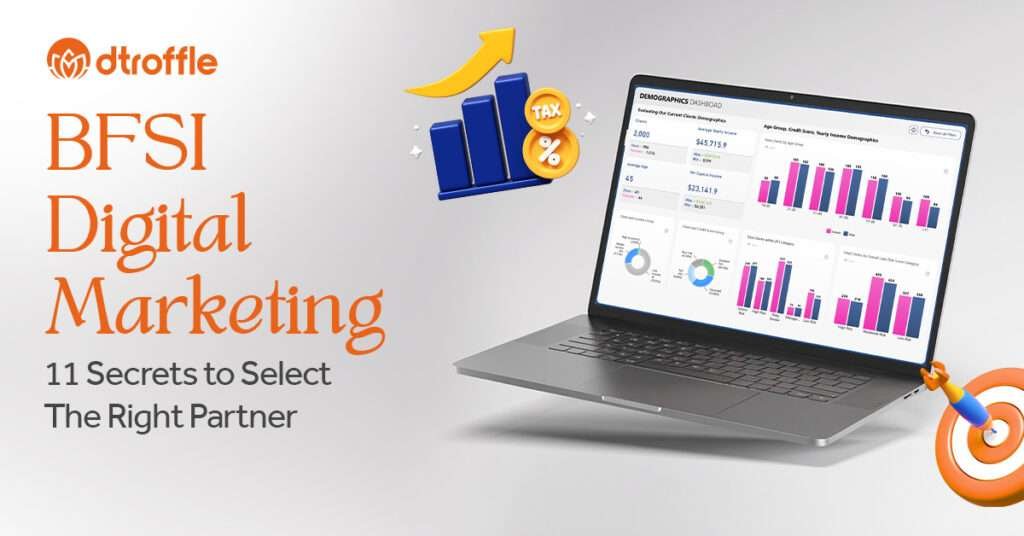
As the digital ecosystem expands at unprecedented speed, every sector is strengthening its online presence. For BFSI brands, going digital is no longer optional, it’s priority. Customers expect mobile apps, online quotes, instant approvals, and responsive service. Traditional marketing alone won’t work out anymore. What you need is a robust BFSI digital marketing approach and just as important: the right BFSI digital marketing agency to execute it. Picking the wrong partner can cost you money, time and even reputation. But the right one can help you grow, build trust with customers, and stay ahead of competitors. Here are 11 secrets that will help you choose the right partner for BFSI digital marketing. 1. They Must Understand BFSI Rules & Compliance Any agency you hire for your BFSI digital marketing must know your world: the regulations, the approvals, the restrictions. You’re working in a heavily regulated space, data protection, advertising rules, KYC/AML, privacy standards. The partner should have prior experience in this area. Ask questions like: If they answer confidently and show proof, you’re off to a good start. 2. Proven Track Record in BFSI Digital Marketing You want a partner who has already succeeded in the BFSI domain. Their past work should show results with financial brands, not just generic marketing wins. Look for case studies showing: If they can show results that match your goals, it’s a strong sign. 3. Integrated Approach Across Channels Your customers don’t interact with just one channel they search online, watch a video, look at social media, then click a search ad. A great agency must cover the full stack of digital: SEO, PPC, content, social, email. Important capabilities: The ability to weave together multiple channels means more consistent results. 4. Deep Understanding of Financial Products & Customers Marketing a personal loan is different from an investment product, which is different again from insurance. A good BFSI digital marketing agency knows the mindset, triggers, objections of each audience. Consider: If they treat your product like “just another client,” they may not be the best fit. 5. Personalisation & Audience Segmentation In BFSI, one size doesn’t fit all. Your segments might include young digital-native borrowers, conservative investors, high-net-worth individuals, rural customers. A top-tier agency will customise campaigns by segment and channel. Key features to check: When your partner talks about “personalised marketing” and shows examples, that’s a good sign. 6. Data-Driven Marketing & Transparency In the BFSI world, every rupee matters and results must be measurable. The right agency gives you clear dashboards, real-time metrics, actionable insight, not just vanity numbers. What to expect: If your agency cannot answer how you’ll measure success, walk away. 7. Advanced Technology, Automation & AI To compete in BFSI, your BFSI digital marketing partner must leverage modern tools: automation, AI, CRM integration, chatbots, predictive analytics. Check for: If they’re relying only on manual processes, they’ll struggle to scale and keep up. 8. Building Trust, Authority & Brand Safety In BFSI especially, trust is everything. A single negative social post or compliance misstep can damage your brand. Your agency should help you build authority and maintain brand safety. Ask them: If the focus is purely “get clicks,” you might be missing the bigger picture. 9. Focus on High-Quality Leads, Not Just Quantity In BFSI you might get thousands of leads, but if they’re not qualified (credit score, intent, region), they’re worthless. The agency should aim for quality over volume. Things to check: A partner obsessed with “lead quality” will serve you better. 10. Clear ROI and Performance Review Framework You must know what you’re getting. A great agency sets KPIs up front, reviews performance regularly and adjusts the strategy based on data. Before you sign: If the agency cannot guarantee review and adjustment, you may end up locked in without results. 11. Strong Communication & Cultural Fit You’ll be working together closely. The agency should feel like a partner, not a vendor. Good communication, transparency, and shared values matter. Evaluate: When you feel good about the partnership, execution tends to be smoother. Final Thoughts Choosing your partner for BFSI digital marketing isn’t just about picking a vendor. It’s about building a relationship with a BFSI digital marketing agency that understands your world, shares your goals, and has the tools and experience to deliver results. Use these 11 secrets as a checklist of compliance + domain experience, integrated channels, personalization, data & tech, quality leads, ROI, trust-building and strong communication. Get the right partner and you’ll accelerate growth, build credibility, and strengthen your digital presence. You May Also Like to Know:
10 Reasons Why Hire a Digital Marketing Agency for Your Business
Understnd, Why Hire a Digital Marketing Agency for Business Growth? Digital Marketing, Sounds simple, right? At first, you may think it’s easy – just go online, create a few posts, and customers will start coming in. But here’s the reality: in today’s world, digital marketing is a serious challenge. Most businesses already know that without a strong digital presence, it’s very difficult to keep customers engaged. In India, Studies even say that India is the largest consumer of data worldwide. That means your potential customers are already online and shopping, booking tickets, ordering food, or browsing products. The real question is – can they see your business? Just like in a physical market, where visibility matters, in the digital world your brand must appear at the top of Google’s Search Results (SERPs). Only then can customers find you, trust you, and buy from you. But is it that easy? Definitely not. To stand out, you need a solid digital marketing strategy, and that’s where hiring a digital marketing agency makes all the difference. What is Digital Marketing and Why Does It Matter? Simply put, digital marketing is the process of using internet tools, plateforms, and data ot achieve your business goals. Unlike traditional marketing, where you can’t always measure results, digital marketing lets you: The Role of Data and Technology Today, businesses succeed because they use data-driven decisions. Agencies know how to study customer behavior, track clicks, and adjust campaigns for better results. Online vs. Traditional Marketing Print ads and TV still exist, but the real battlefield is online. Customers read reviews, compare products, and buy after checking digital platforms. Without a strong online presence, your business risks being invisible. Also Read: Elements of Digital Marketing 10 Reasons Why Hire a Digital Marketing Agency Let’s explore why hiring a digital marketing agency is one of the smartest business decisions you can make. 1. Access to Professional Expertise Agencies bring a team of specialists, SEO experts, content creators, social media managers, and ad strategists, who know how to grow your brand online. 2. More Affordable than In-House Teams Building your own team means paying high salaries, buying tools, and training staff. An agency gives you the same (or better) results at a fraction of the cost. 3. Focus on Your Core Business You should focus on running your business, not worrying about Google’s latest algorithm. Agencies handle the marketing while you focus on growth. 4. Access to Advanced Tools Agencies use premium tools like SEMrush, Ahrefs, HubSpot, and Google Analytics, tools that are often too expensive for small businesses. 5. Better ROI with Targeted Campaigns Why waste money showing ads to everyone? Agencies design highly targeted campaigns that reach the right audience, giving you a better return on investment. 6. Stay Updated with Trends Digital trends change fast. Algorithms update every few months. Agencies keep track, so your brand doesn’t get left behind. 7. Stronger Brand Visibility Through SEO, social media, and paid ads, agencies make sure your brand is always in front of the right people. 8. Measurable Results Unlike offline ads, digital campaigns are trackable. Agencies give you reports showing clicks, leads, and sales. No guesswork – just numbers. 9. A Complete Team at Your Service Instead of hiring one person, with an agency you get an entire team of experts working together to boost your brand. 10. Scalability and Flexibility As your business grows, your marketing needs change. Agencies adjust strategies quickly, whether you want to expand to new markets or launch a new product. Dtroffle, Agra – Helping Businesses Grow Take Dtroffle, a digital marketing agency based in Agra, Uttar Pradesh. With their team of SEO experts, content writers, social media specialist, E-mail marketers, D2C Growth experts, and ad specialists, they’ve helped local and global businesses build strong digital visibility. This proves the real impact an agency can make. FAQs on Why Hiring a Digital Marketing Agency Q1. Why can’t I manage digital marketing on my own? Ans: You can try, but without expertise, you may waste time and money. Agencies bring proven strategies. Q2. How much does it cost to hire a digital marketing agency? Ans: Costs vary, but hiring an agency is usually cheaper than building an in-house team. Q3. How do I know if an agency is right for me? Ans: Check reviews, past clients, and case studies. A good agency will also give you a clear strategy upfront. Q4. Can digital marketing really increase sales? Ans: Yes! With the right campaigns, digital marketing boosts visibility, builds trust, and drives conversions. Q5. Do small businesses also need digital marketing agencies? Ans: Absolutely. Small businesses often see the fastest growth when they use agency support. Q6. What services do agencies provide? Ans: SEO, social media management, Google Ads, content creation, email marketing, and more. Conclusion: The Future Belongs to Digitally Visible Brands Today, simply being online isn’t enough. Customers need to see, trust, and choose you over competitors. That’s why hiring a digital marketing agency isn’t just an option-it’s a necessity. From expertise and tools to measurable results, agencies give you everything you need to grow. If you want your business to succeed in this digital-first world, the best step is simple: hire a digital marketing agency today.
Ethics in Digital Marketing | 7 Powerful Principles to Build Trust & Win Customers
Ethics in Digital Marketing: In the ever-evolving world of digital marketing, staying ahead isn’t just about using the latest tools, it’s about earning and maintaining consumer trust. From social media ads to influencer partnerships, marketers have more opportunities than ever to connect with audiences. But with great power comes great responsibility. Ethical in digital marketing means doing what’s right, not just what works. As we explore the core principles of digital marketing ethics, we’ll also connect to related strategies like Digital Marketing Content Optimization, Digital PR, and choosing the Best Digital Marketing Agency that follows these practices. 1. Transparency and Honesty Transparency forms the foundation of ethical marketing. Avoid misleading clickbait and exaggerated promises. Whether you’re promoting your brand or comparing strategies like Google Ads vs Meta Ads, always provide clear, accurate information. Honesty helps your audience understand your brand’s real value, and fosters long-term loyalty. This aligns directly with the approach outlined in our Digital Marketing Services, which highlights authentic messaging. 2. Respect for Consumer Privacy Data is gold in digital marketing, but how you use it defines your brand’s ethics in digital marketing. Ethical marketers: Ask for explicit user consent Use data only for stated purposes Provide easy opt-out options Respecting privacy and following regulations like GDPR ensures your audience feels safe. This ethical approach also complements content strategies in What Is Marketing and What Is Its Benefit in 2025, where trust is key to conversion. 3. Avoiding Manipulative Tactics Yes, digital tools are powerful, but with power comes accountability. Creating fake urgency or exploiting insecurities can yield short-term gains, but they tarnish your brand over time. Instead, offer real value that solves real problems. Our insights on Content Optimization can help you communicate that value more effectively. 4. Fair Competition and Integrity Avoid underhanded tactics like negative SEO or fake reviews. Ethical digital marketers compete by building better solutions, not by tearing others down. Fair play improves not just your brand’s reputation, but also the digital ecosystem as a whole. Working with the Right Digital Marketing Agency ensures your campaigns reflect these values. 5. Social Responsibility in Marketing Your campaigns should reflect your brand’s stance on social issues. Ethical brands promote: Inclusivity and diversity Responsible messaging Positive social impact For example, our article on The Rise of Micro-Influencers explains how authentic, socially aware voices are now more powerful than mega endorsements. 6. Influencer Marketing and Disclosure Influencer campaigns must clearly disclose partnerships. Failing to do so can mislead consumers and break trust. Work with influencers whose values reflect your own. Our guide on How Digital PR Can Benefit Your Business shares more on building authentic collaborations that convert. Conclusion Ethics in digital marketing is more than compliance, it’s a commitment to trust, fairness, and long-term growth. By being transparent, safeguarding privacy, avoiding manipulation, and acting responsibly, your brand earns respect and loyalty. For ethical, results-driven marketing strategies tailored to your business, explore our full range of Digital Marketing Services. Related Reads: Digital Marketing Content Optimization Guide Google Ads vs Meta Ads How Can Digital PR Benefit My Business? Best Digital Marketing Agency in Jaipur